Mailboxes to Memories: American Girl’s Storytelling through Catalogues: Reflections from the “Oh, You Beautiful Doll” Conference at the University of Pittsburgh
AUTHOR: Blake Changnon and Janine B. Napierkowski
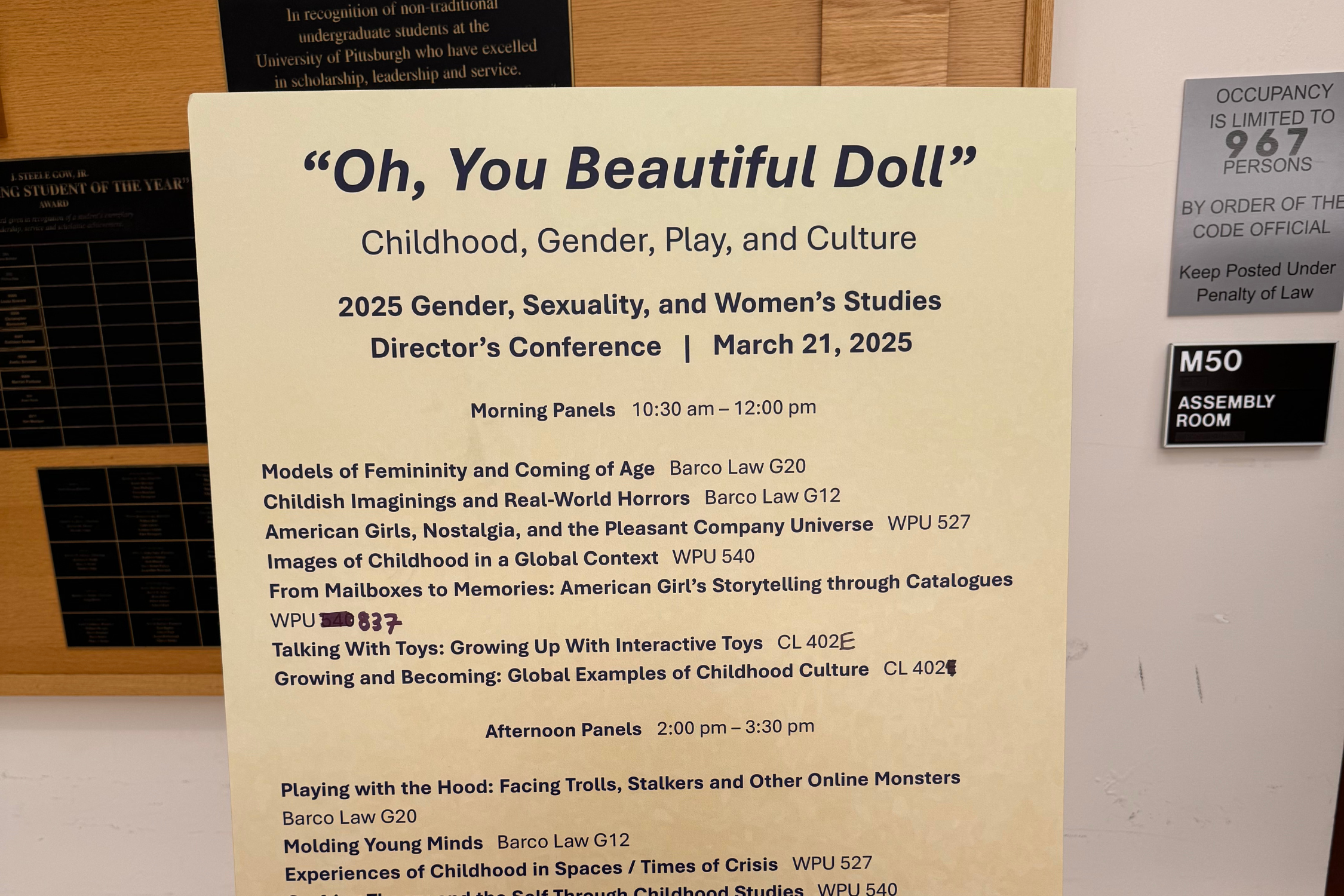
In March 2025, the University of Pittsburgh hosted the “Oh, You Beautiful Doll” conference, which brought new attention to the ways childhood, gender, and identity are shaped through toys and media. Blake Changnon and Janine Napierkowski presented a session on Pleasant Company and American Girl.
Their presentation, titled “From Mailboxes to Memories: American Girl’s Storytelling through Catalogues,” looked at how Pleasant Company used its mail-order catalogues in the 1980s and 1990s to connect with children. While catalogues are usually seen as advertising, these were much more. With detailed artwork, carefully written descriptions, and beautifully arranged pages, the catalogues told stories that brought each historical doll’s world to life. For many children, flipping through the catalogue was just as exciting as reading one of the American Girl books.
Blake, who founded The Changnon Family Museum of Toys and Collectibles, brought his perspective as a longtime collector with one of the most complete catalogue collections out there. Janine, a museum professional with years of experience working with historical collections, brought a curatorial lens to the topic. Together, they showed how these catalogues didn’t just sell dolls, they created immersive stories that helped children learn about different periods in American history through the eyes of relatable characters.
They began with background on Pleasant Rowland, the company’s founder, and how she built Pleasant Company from the ground up. Using her own savings, she launched the brand with a bold idea: sell directly to families through catalogues. The first catalogue was mailed to 500,000 homes in 1986. That holiday season, the company brought in $1.7 million in sales. Blake and Janine explained how this direct-to-home model allowed Pleasant to control how the stories, packaging, and products were presented, something she didn’t think traditional stores could do.
The presentation included scans from real Pleasant Company and American Girl catalogues, showing hand-written wish lists and circled pages, things many people in the room remembered doing. They also touched on the American Girl magazine, which began in 1992 and offered another way for girls to connect with the brand through advice columns, activities, and stories that went beyond the dolls themselves.
Janine then connected this work to The American Girl magazine, originally published by the Girl Scouts from 1919 to 1979. She explained how both Pleasant Company and the Girl Scouts used print media to help girls build confidence, community, and a sense of identity. One especially meaningful connection was that Valerie Tripp, who wrote the stories of Molly, Samantha, Felicity, Josefina, Maryellen and many more, was a former Girl Scout!
To end the presentation, Blake and Janine looked at how American Girl continues to evolve. From websites and online games in the 2000s to social media platforms like TikTok and YouTube today, the brand keeps finding ways to stay connected with its audience. Blake and Janine introduced the idea of “nowstalgia,” which is the mix of nostalgia and the present, showing how Millennials are returning to the brand as adults, buying older American Girl dolls online and sharing the stories with a new generation of children.
Their session was amazing and provided great dialogue between Blake and Janine and conference attendees. For anyone who remembers waiting for the catalogue to arrive in the mail or circling their dream doll, it was more than just a presentation, it was a reminder of how deeply those stories have stayed with us.